The Border That Moves Without Moving
See how a border can stay fixed while rules, routes, and access change, and learn to describe those shifts without claiming the territorial line moved.
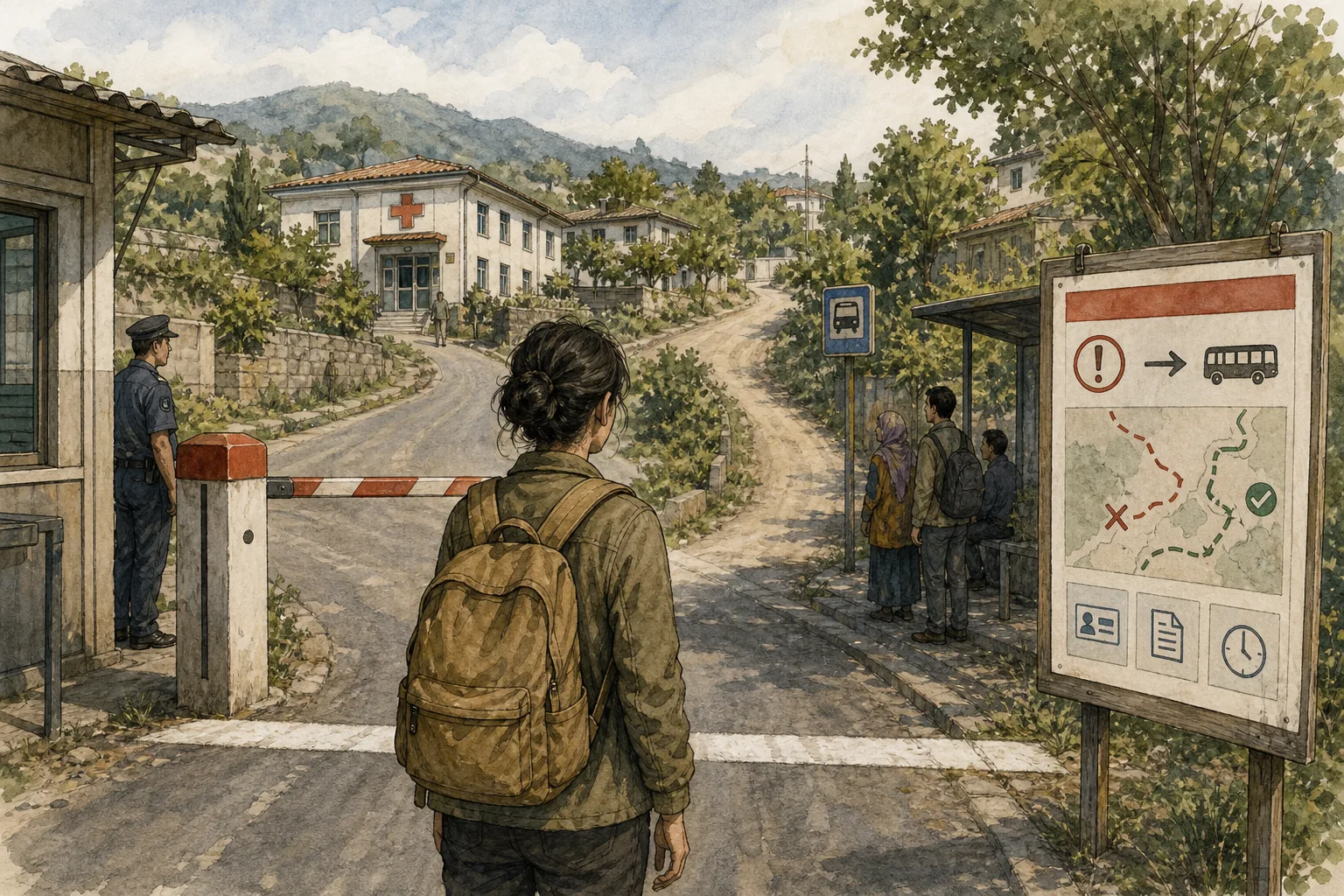
A traveler reaches the same painted line at a crossing on Monday and Friday, but the bus to a nearby clinic now takes another road. The border itself may be unchanged; the rules or transport arrangements around it may not be. A border that moves without moving is usually a change in how people encounter a fixed boundary, not a change to the boundary on a map.
A territorial boundary and the systems around it are related, but they answer different questions. A map may show where jurisdictions meet; it cannot establish which documents a particular traveler needs or whether a local bus is operating today.
What can change while a border stays put?
Crossing procedures, inspection hours, transport routes, and access to public services can change without a territorial boundary changing. Such shifts can alter who may cross, how they do it, or how far they must travel.
Keep three things distinct: the boundary, the arrangements governing movement, and people’s routines. A new checkpoint or an altered bus route may affect daily life, but neither alone shows that the boundary moved.
Use the narrowest description the available records support: a crossing procedure changed, a road was restricted, or an authority issued a new rule. A claim that the boundary itself changed requires evidence of the relevant legal or political process, not merely a different experience at a checkpoint.
How can you keep a useful record?
For an area you are examining, note what each dated public source actually establishes. The observations below lead to a specific decision and an alternative when the evidence is incomplete or points elsewhere.
- Map or boundary record: Check the publisher, date, and description of the line. If it identifies a territorial boundary and no cited process shows a change, describe what the record depicts; if maps conflict, state that disagreement and avoid a firm claim.
- Official notice: Check the issuing authority, publication date, effective date, and stated scope. If it changes crossing procedures, describe those procedures; if it concerns territorial status, consult authoritative records of the relevant process before claiming the boundary changed.
- Crossing conditions: Check which people, goods, directions, and purposes the notice covers. If it applies to a defined group or activity, limit the description to that scope; if the scope is unclear, say so rather than calling the crossing simply open or closed.
- Transit information: Check dated notices from the relevant transit operator or local authority. If a route changes while boundary records do not, describe a transport change; if the cause is undocumented, leave the cause unstated.
- Service access: Check public information about routes to a clinic, school, or market and any access conditions. If a documented rule or disruption affects a route, describe that specific effect; if the information covers only one route or group, do not generalize it to all residents.
- Local accounts: Check who is speaking, when, and from what perspective. If accounts differ, describe the difference; if an account lacks context or is isolated, attribute it narrowly rather than presenting it as a shared experience.
- Claim record: Note the date, source, stated change, and people the source identifies as affected. If it names no affected group, mark that as unknown; if it identifies a limited group, preserve that limit rather than extending the claim to others.
This record organizes public information; it is not travel clearance or a legal determination. For an actual journey, check current instructions from the relevant authorities for your circumstances. If a question about legal status affects your plans, consult a qualified professional.
Why can a border feel different without moving?
Can a border become stricter without moving?
Inspection procedures or document requirements can change while the territorial boundary stays in place. Requirements depend on the relevant authority and traveler, so check current official instructions for your circumstances rather than assuming one rule applies to everyone.
Can a border become less noticeable?
Routine movement or less visible checks can make a boundary less prominent in one person’s daily life. That experience does not mean the boundary or the laws on either side have disappeared.
Does a new checkpoint mean the boundary moved?
No. A checkpoint’s location does not, by itself, establish the location or legal status of a territorial boundary.
To describe a boundary change, identify records of the relevant legal or political process and the authority or parties involved. If those records identify a dispute or leave the status unsettled, retain that qualification in your account.
Why can people experience the same crossing differently?
Requirements may differ according to a person’s documents, residence, purpose of travel, or the arrangements governing that journey. One visitor’s experience should not be treated as a description of every resident’s routine.
Which sources explain a practical border change?
Match the source to the question: use official notices for rules, transit information for routes, municipal guidance for services, and credible local reporting for context. Check who issued each item and when it took effect; an old notice may describe an arrangement that has since changed.
A national announcement may set out a broad rule while a local authority explains where it applies. If the two address different areas or groups, describe each scope rather than forcing them into a single account. If they directly disagree, identify the disagreement and the records involved instead of treating either as a complete answer.
Ask what kind of movement a source describes. A notice may concern commercial traffic, one direction, or a defined group of travelers. The word “open” can conceal those distinctions, so state the conditions the source gives.
Imagine a fictional town where a clinic sits across a fixed boundary from a neighborhood it serves. At the outset, the clinic is reached by one road, and a dated public notice says that residents who meet a stated documentation condition must use another crossing. Compare the notice’s effective date and named group with the clinic’s route information; then record the changed route for that group, leave the route for others unclaimed unless a source addresses them, and describe the boundary as unchanged unless separate records show otherwise.
How should you describe a border change?
Match the claim to what the records establish. If a notice changes crossing procedures, say the procedures changed; if a road closure alters access, say the route was disrupted. Reserve claims that the boundary itself moved for evidence identifying the relevant process and authority or parties.
Crossing may feel routine while a boundary continues to distinguish jurisdictions, laws, records, or services. Convenience describes an experience, not the boundary’s legal significance.
For a precise account of a border that moves without moving, state what the records establish about the boundary, what arrangements apply, and whose routines they affect. If they establish a changed rule or route but not a territorial change, describe the practical shift and leave the larger claim open.
Keep exploring
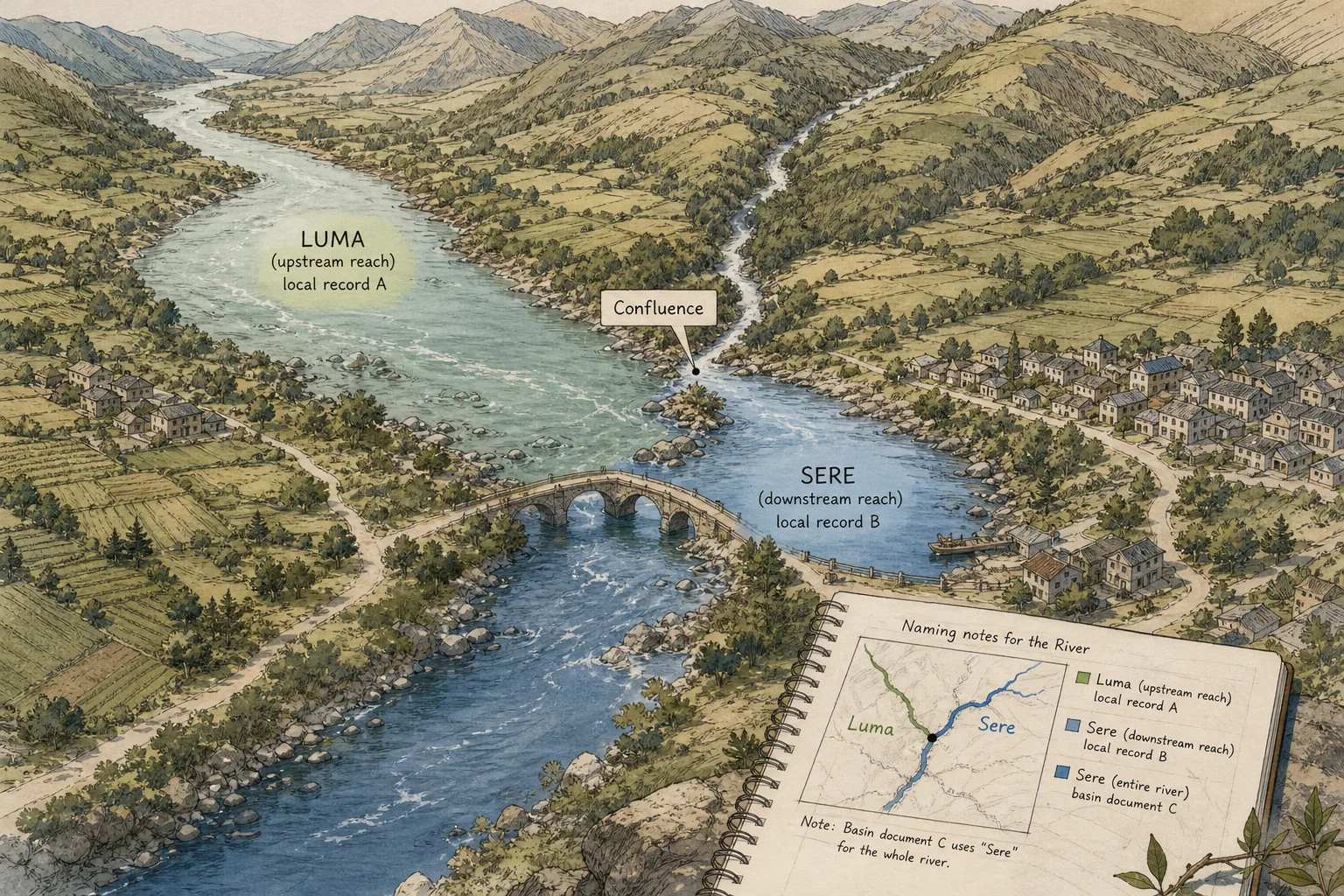
How to Read Shared River Names on Maps
Learn how to read shared river names on maps by checking each label’s source, language, and…
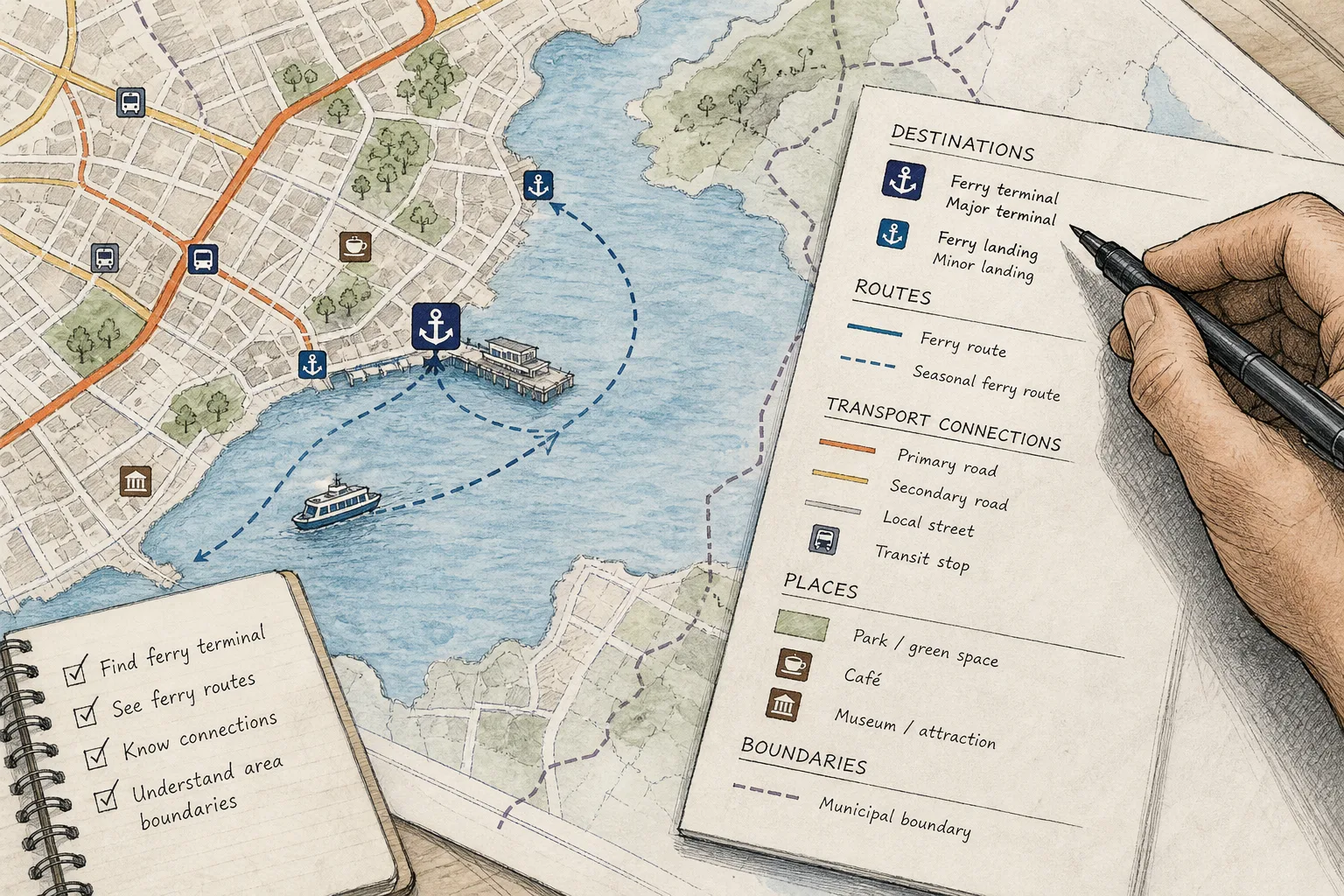
A Map Legend Is a Set of Decisions
A map legend is a set of decisions about what readers notice. Choose symbols, labels, and…